MICHAEL MUNGULA
SPLIT LOG (SPLIT LOG)
$350.00
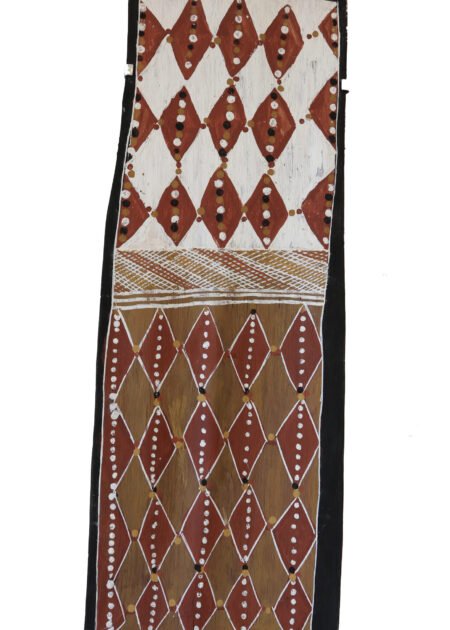
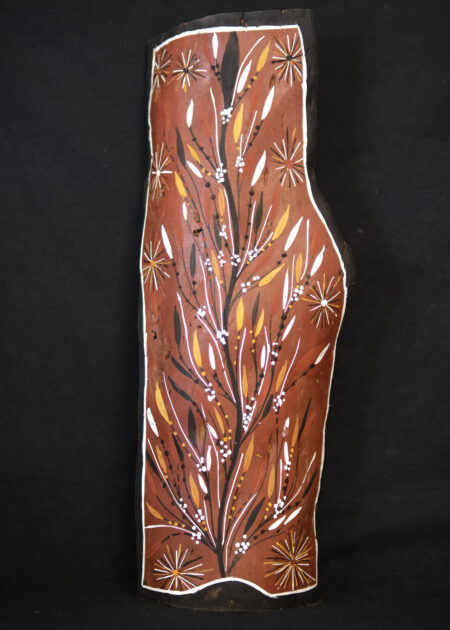
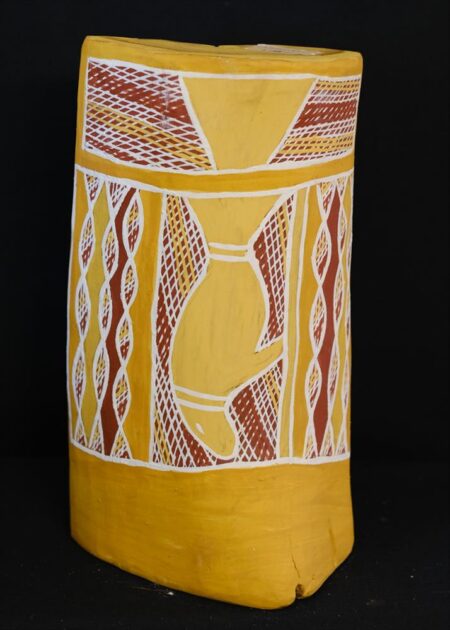
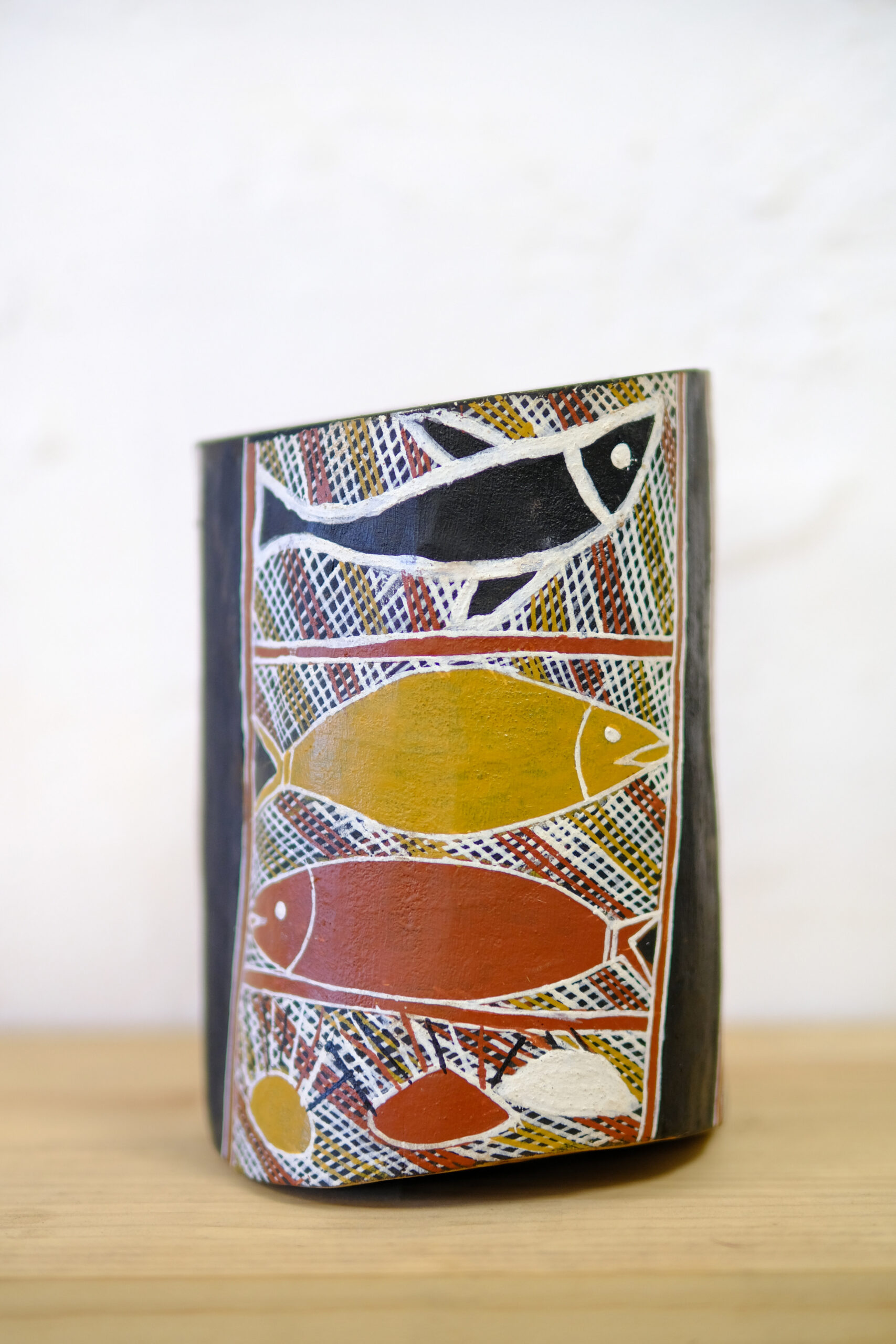
This painting shows clan totems connected the artist’s Djambarrpuyŋu Wanybarrŋa clan from their ancestral homeland Djarraya on the Flinders Peninsula, in between Buckingham Bay and Ulundurwi Bay.
The work shows baḏama, also known as djirka, a type of saltwater shellfish found on rocks and reef in shallow waters, and a favoured food for many, especially wulata (Oyster-Catcher). While this type of shellfish is sung and owned by several other Yolŋu clans, the colours used to paint baḏama identifies it as Djambarrpuyŋu from this area. The artist explains,
“Us Djambarrpuyŋu clans share this manikay (ceremonial song cycles), but this one is from my ŋäṉḏipulu, my mother’s clan [Djambarrpuyŋu Wanybarrŋa]. I am right to tell this story as djuŋgaya (ritual custodian). The other Djambarrpuyŋu clans, they can tell their story. I learnt from my ŋapipi, my ŋathi and my dhuway, my mother’s brothers, her father and my brother-in-law. They are the real waṯaŋu (owners) and they taught me. Now I’m teaching my gutharra (grandchild)“.
Also depicted is boṉba (dolphin) and milika’ (moonfish). The rärrk (cross-hatching) represents the gapu moṉuk (saltwater) that they are found in. It is these waters with notoriously strong currents and large tide changes around Djarraya that ceremonially connect the Djambarrpuynŋu clan with other Dhuwa clans in the area and binds them in reciprocal ceremonial obligations.
Both of these figures are sung in Djambarrpuyŋu manikay (ceremonial songs) for which the artist is djuŋgaya (ritual custodian) with ceremonial responsibility to care for their mother clan and ceremonial knowledge. These paintings are painted on young acolytes and sung and danced at dhapi (boys initiation ceremony), and also sung and danced at bäpurru (funeral ceremony).
21 x 24cm
In stock